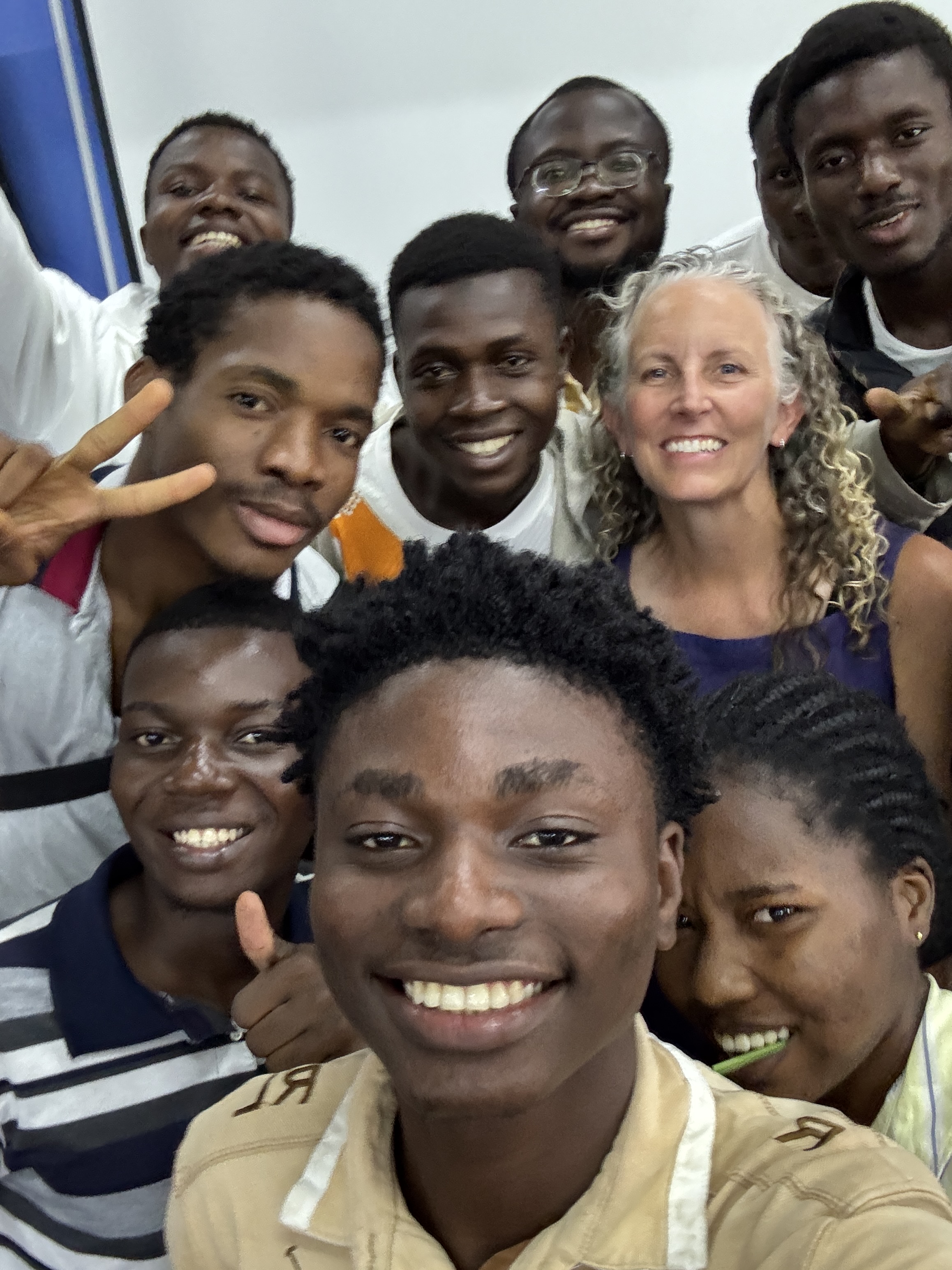
When I went to DC this summer for the State Department training for this position, the main takeaway was that flexibility would be the key to my success. Arrive in the country with no place to live? Be flexible! You think you know what you will teach, but then you arrive and are teaching something completely different? Be flexible! However, the idea of flexibility can cause its own doom loop, wondering how to be flexible without any idea of what you need to be flexible about. It’s like the show Survivor, but you don’t know what tools to bring to the island. Is there even an island? You see? Flexibity doom loop.
When Tim left, I knew I needed to get an action plan fast so I didn’t sit around wallowing in pity in my hotel home. I wanted the staff here to like me because I’m likable, not because they felt sorry for me. The line between the two can be slim.
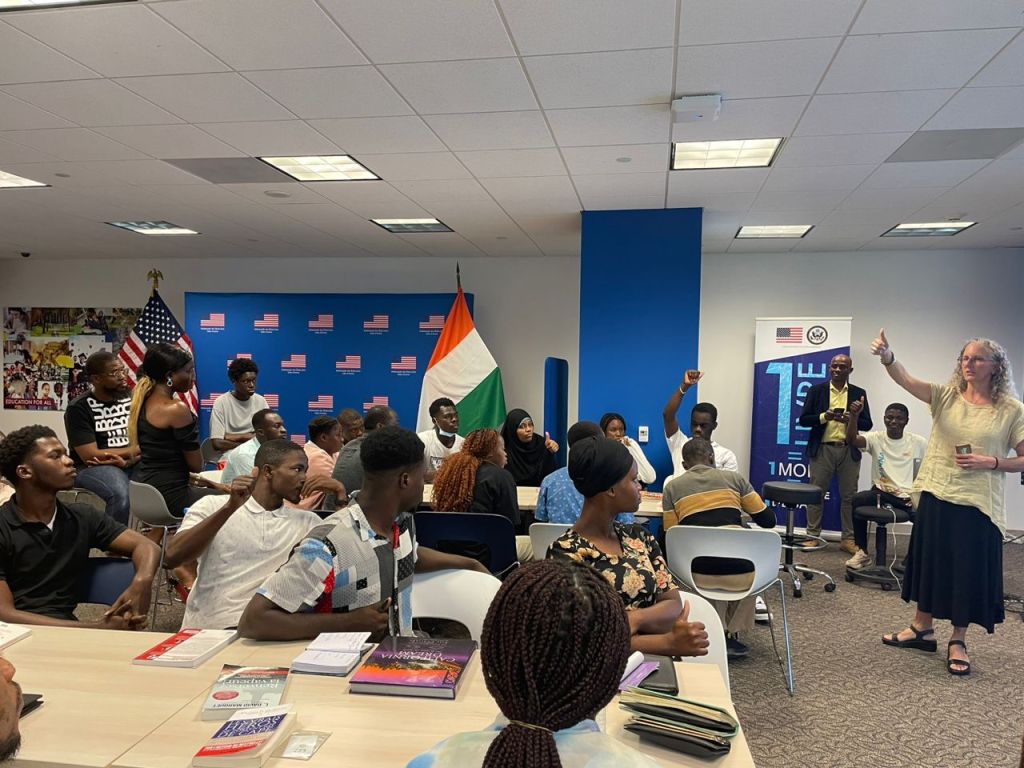
My university told me I wouldn’t need to start for a week, so I messaged the woman who works at the Embassy and runs weekly classes for Ivorians who want to learn English. I asked her if I could sit in on her class to see how things work. She responded, “Of course, but maybe you would prefer to teach the class. Also, it would be great if you could teach a class about critical thinking.” Well, that conversation went from 0 to 60 in about 8 seconds. Since disinformation is as much (or more) of an issue here as it is in the US, this is a topic for the ages.
Critical thinking. Critical thinking……how to teach this? It’s a big topic to fit into a 2-hour class with 40 students I’ve never met, and I have little understanding of their level of English, but I’m not one to turn down a challenge. Especially a challenge that I am unprepared for. Bring it!
I decided to start with a shared understanding of something – like a place. I believed that most people knew some things about New York City, even if they otherwise knew little about the US. I planned to start with a conversation about the idea of critical thinking: using your brain, knowledge, and experiences to judge the reality of information presented to you rather than just accepting information as accurate. My big idea for this lesson was to tell everyone that I lived in New York City, and then I would show them pictures of Vermont: mountains, the lake, people camping, hiking, skiing, and swimming. I believed most people would doubt that this was NYC, which was how we would have a deeper discussion about critical thinking. Should they trust me? Am I a reliable source, etc? I thought it was a solid plan.
Nope. Turns out, that was a really shitty plan.
Right away, I realized that language level in this class would be challenging because about half of the people had few English skills. Ok, so there will be more explanation necessary on a few key points. No problem. When most people in the class claimed to know what critical thinking was, I was hopeful. Great! They also claimed to know lots of things about New York City. Perfect! However, they started nodding their heads in a very interested (and not very critical thinking) kind of way when I showed images of people skiing. This made me start to worry.
Skiing in New York City!?! Who knew?
There is a big lake in New York City?!? Wow!
There is camping in the city also?!? Fun!
Oy.
Off. The. Rails.
I spent the rest of the teaching time trying to backpedal and set the record straight. There is no skiing in NYC and no giant lake. No camping or big mountains. So much for critical thinking…. Luckily, I saved the day with a fun game and Smarties to round out what hopefully will be the worst lesson of my year here.


 On Another Continent
Leave a reply to MJ Cancel reply