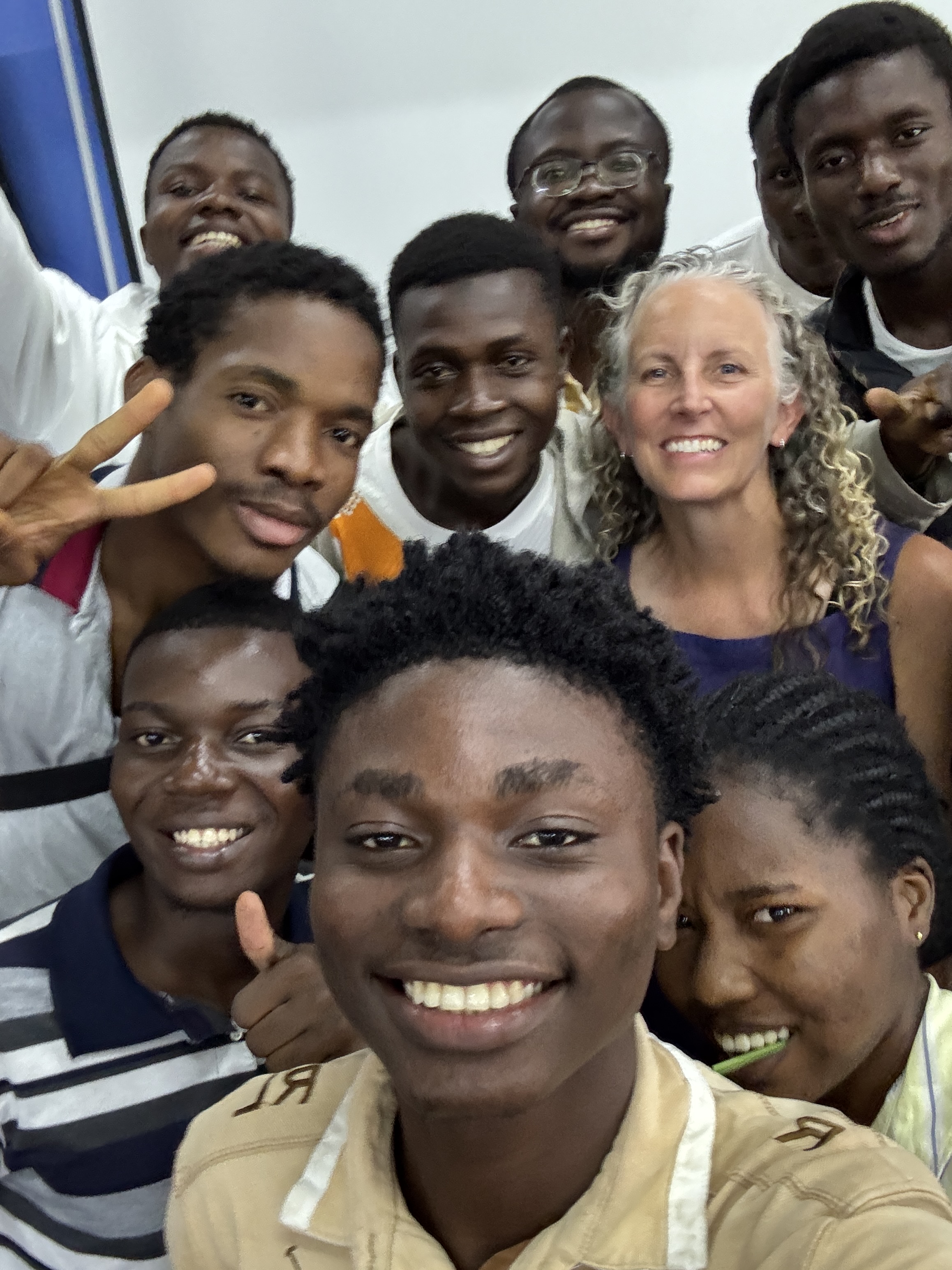
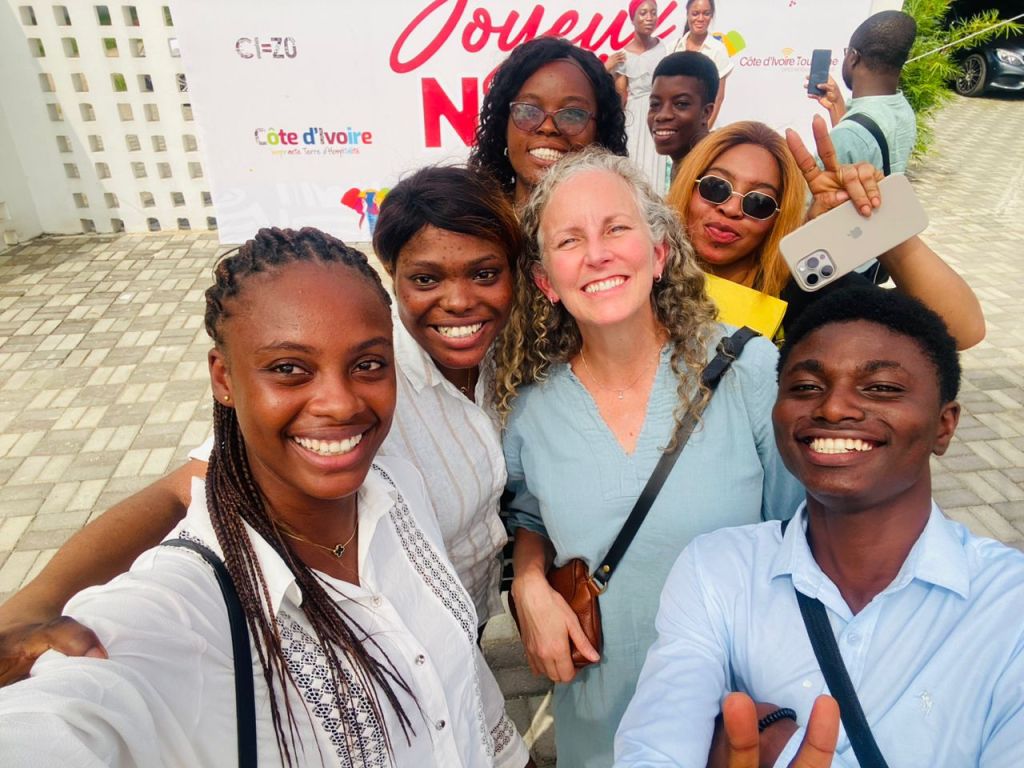
In the fall, my friend Adi (an Ivorian teacher) and I taught English for hospitality and tourism classes at the US Embassy. The students were so fun, and I was instrumental in explaining the differences between British and American English in many scenarios using words like “lift” vs. “elevator.” As a comic interlude, I also warned them about the differences in British and American English for words like “pants” and “suspenders.” As for the cultural differences in the word “fanny,” I did not warn them. I’m genuinely hoping they do not have an occasion to use this word in their work as tourism professionals, especially with British tourists. If they do, well, I’m sorry.
During our time teaching this course, Adi and I have formed a great bond with the woman who is the head of Côte d’Ivoire Tourism. She came to our class to give a talk to the students, and at the end of her talk, she invited the students to visit the tourism office and eat some Ivorian chocolate. Sounds fun!
About a month after the course ended, Adi told me the chocolate event at the tourist bureau was the next day if I wanted to attend. I didn’t have any other classes that day, so I told him I would be there for what I thought was a tour of their offices.
The next morning, I looked on the map to find out where I was supposed to be going, and like always, nothing was clear. There were two different offices named Côte d’Ivoire Tourism, and they were about 30 minutes away from each other. Adi finally instructed me which one to go to, and I faced the second challenge of the day when I could not plug the location into my map in Yango. Yango could only find the incorrect office location.
I may have mentioned this before, but a significant challenge here is that the streets do not have names; therefore, the buildings and houses do not have addresses (or zip codes, as it turns out). To arrive at the correct location, you need to know where that building is in Google Maps and then place a pin on it. The Yango maps are far less sophisticated with much less detail, so you need to find the exact location on the Yango map in the app and put a pin in it as your destination. It sounds much easier than it is, believe me.
When I looked at Google Maps to find the tourism office, I saw that the Korean Embassy was not far away, so I used that as the Yango location, figuring that it was big and obvious and that I could walk from there. When I got into the Yango, we drove to an area I had not been to before, and then suddenly, the driver said, “Here we are” (but in French). When I got out of the car, the Korean Embassy was not in sight, and since that was my north star, it took me some time to get oriented while standing on the street. There’s nothing like a white lady turning in circles to draw a curious crowd.
I finally figured out which direction to walk. In my sweaty travels, I saw many interesting sights, including the World Bank, which was throwing so much A/C onto the sidewalk that I almost stopped in for a chat to get cool.
I finally arrived about 5 minutes before the event started, and I asked multiple people hanging around about the tour. They did not know what I was talking about, and finally, when I said, “Tourism students,” they directed me to a building at the back.
I found about 150 students seated in rows of chairs for a presentation, which was surprising. I saw Adi across the room and walked toward him, hoping to grab a seat near him to cool off, but the boss of Côte d’Ivoire Tourism intercepted me and directed me to a chair at the front of the room.
Unbeknownst to me (and apparently Adi), I was one of a few guest speakers that day, along with the most famous Ivorian social media live-streamer, who was seated to my right. Um. They managed to squeeze in another chair for Adi near me as I mopped my sweaty brow and subtly tried to dry my pits at the front of the room. Luckily, I love a microphone, so I improvised my most enthusiastic tourism speech and hoped I appeared prepared.
One piece of advice for I gave to the budding entrepreneurs in the crowd was the very American slogan, “Dream Big, Start Small.”* The head of Abidjan Tourism liked this so much that she started using it as a call-and-response slogan throughout the rest of the day. At any lull in the conversation from then on, she would scream, “Dream Big!” Of course, the audience would respond with their most enthusiastic “Start Small!” Maybe this will be my lasting legacy in Côte d’Ivoire.
At the end of the presentation, the boss handed each person in the front of the room the most enormous box of chocolate. It was at least 2 feet tall and beautifully decorated with a matching bag. I could not even imagine how much chocolate was in a box this large. As promised, the students each got a small box of chocolate.
Later, when I opened the box of chocolate, I was surprised to find a smaller box like the students received, alongside three massive hunks of chocolate molded into shapes: an African mask, a cowrie shell, and a sand dollar. All are symbols of Côte d’Ivoire.
Since that day, I have learned to seek clarification when agreeing to attend events.
*Maybe this is the next bumper sticker, Mark? Ha!
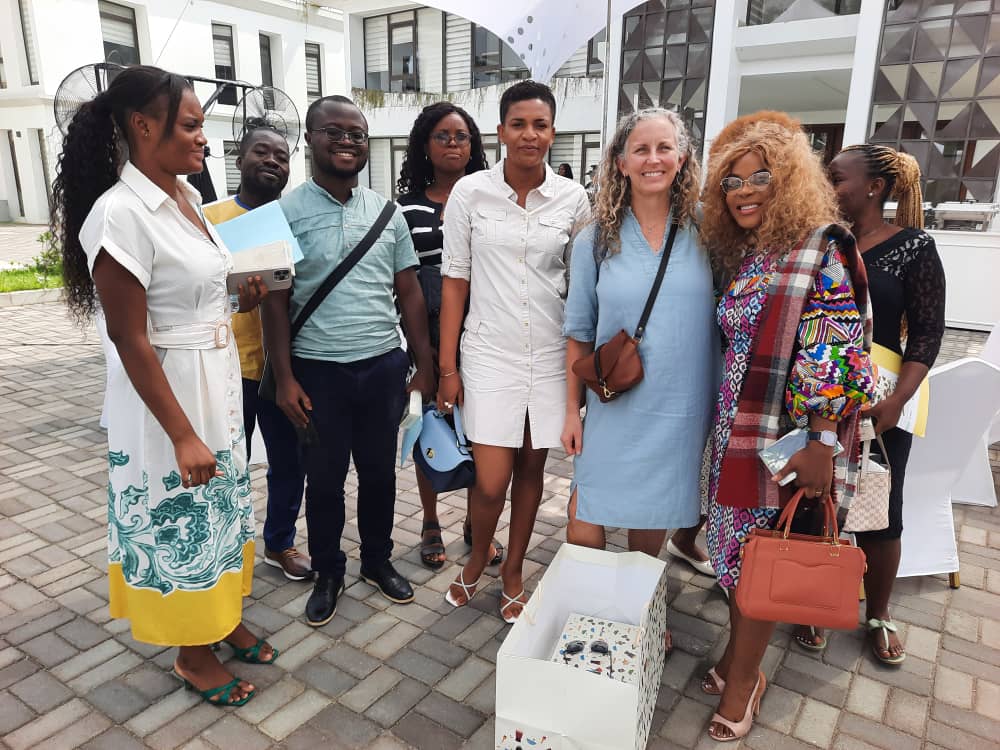
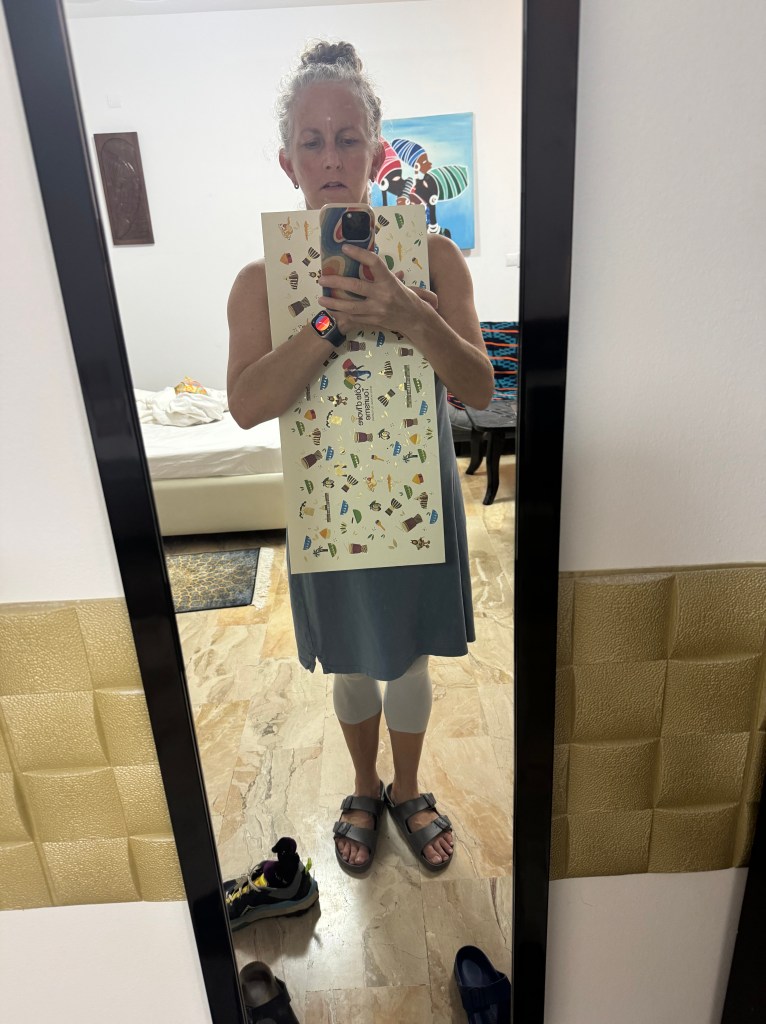
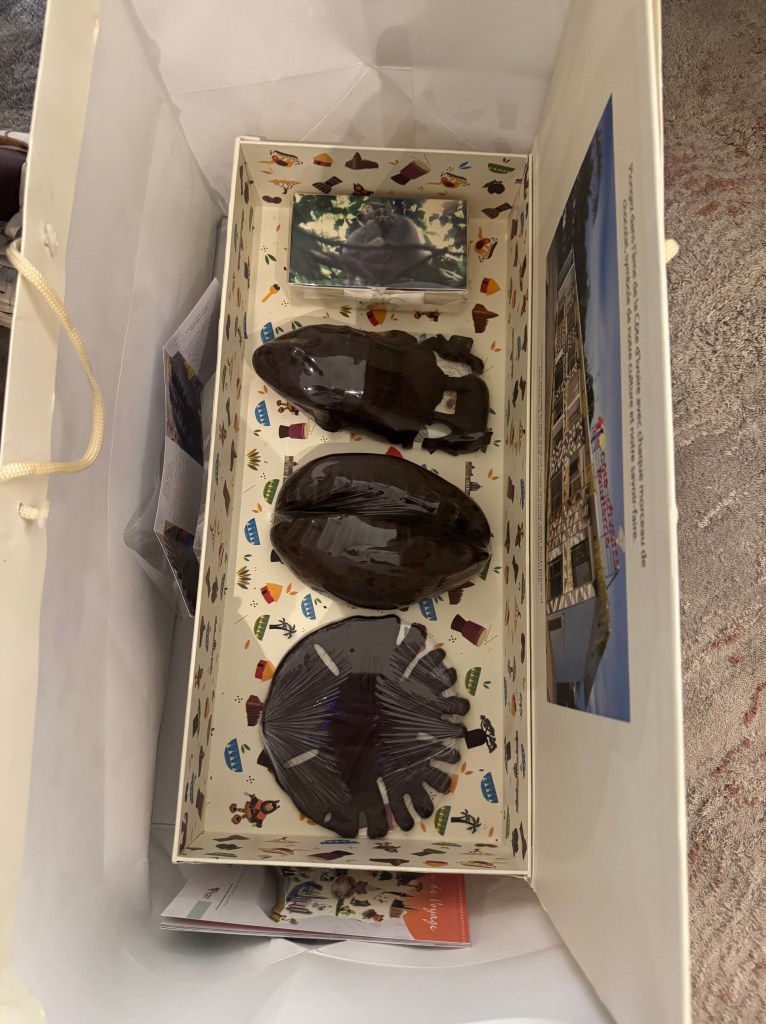
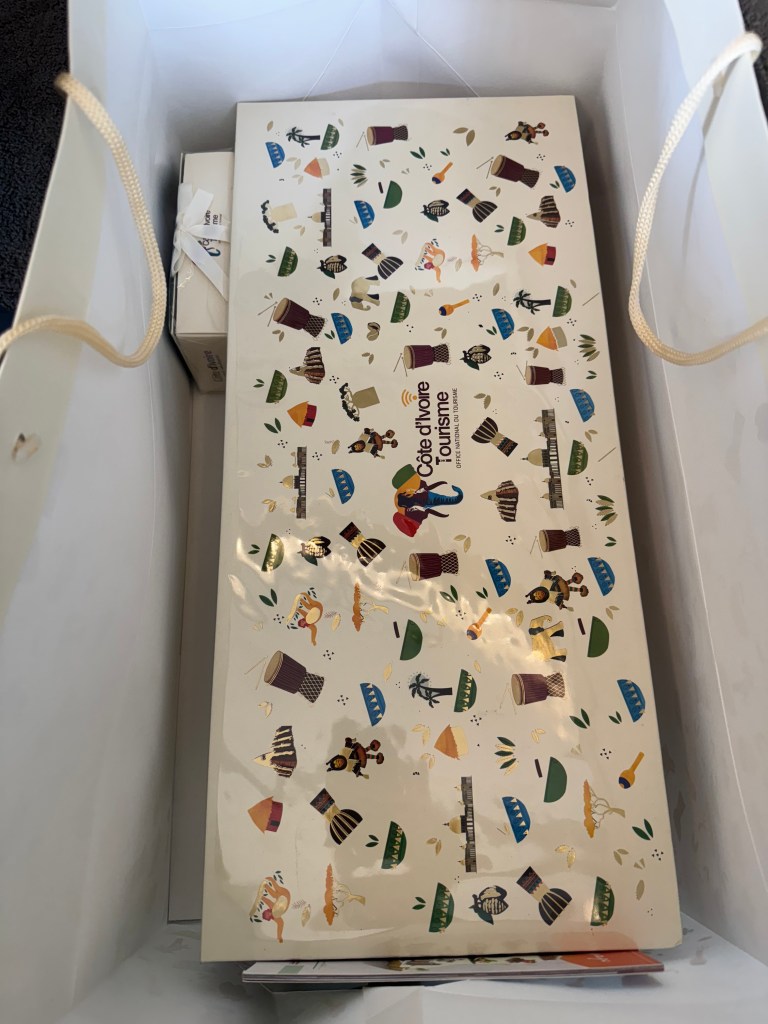
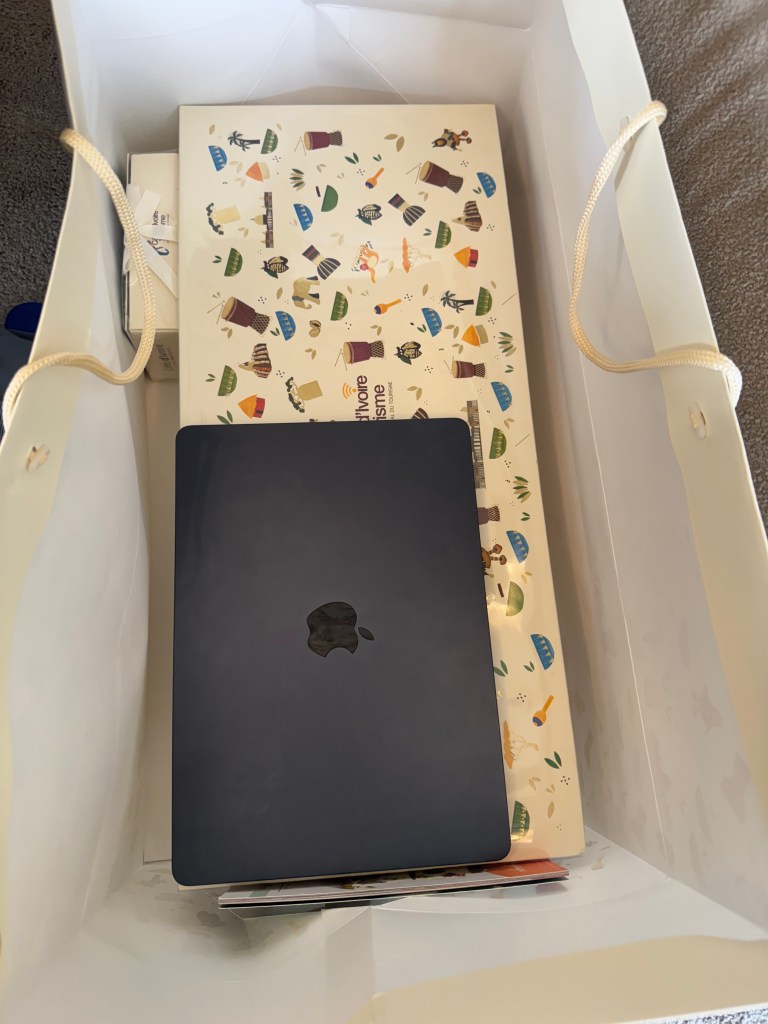
Notice the size of the box in comparison to my computer. Crazy.
 On Another Continent
Leave a comment